How a piece is made.
Stage 01
Throwing
the form on the wheel
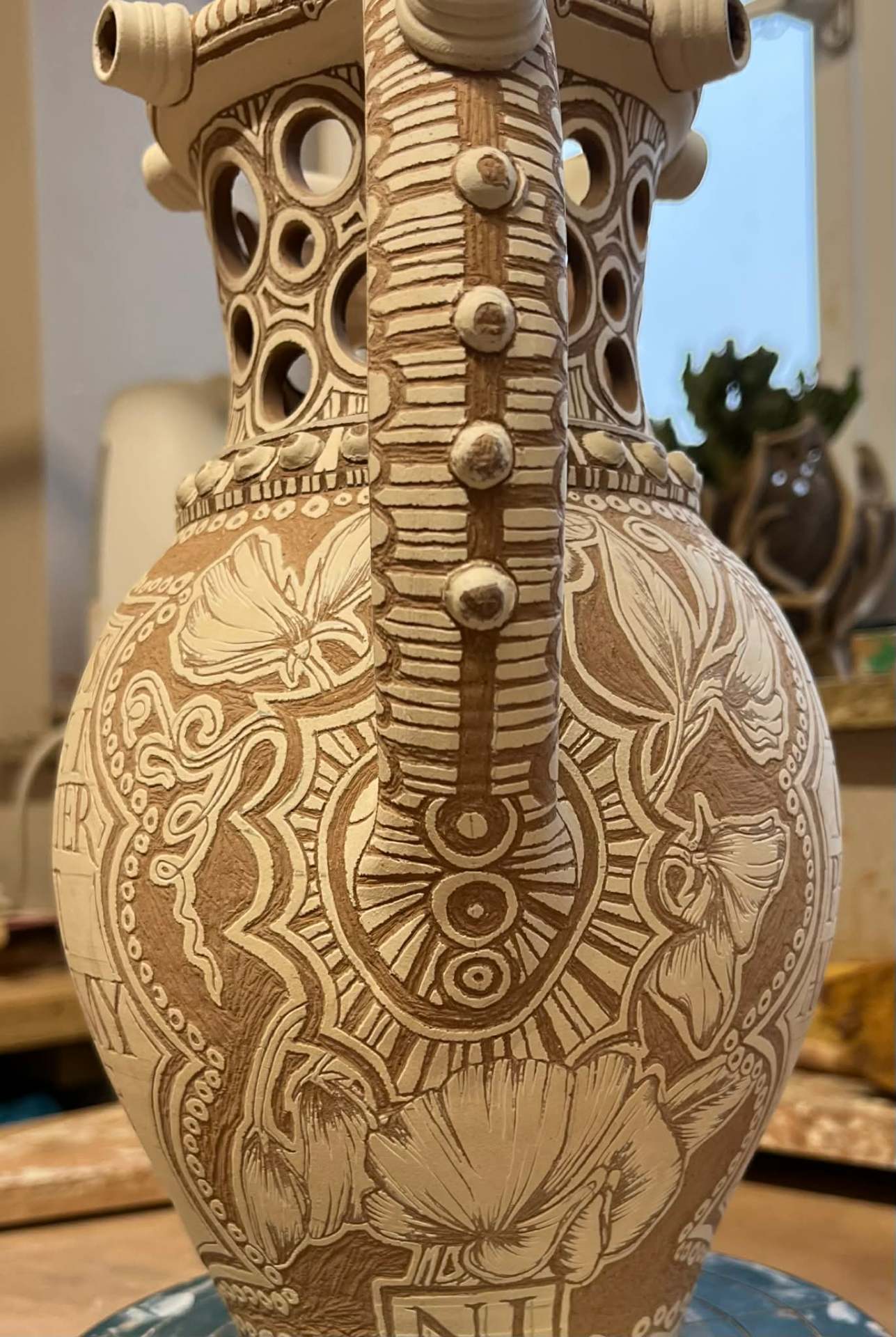
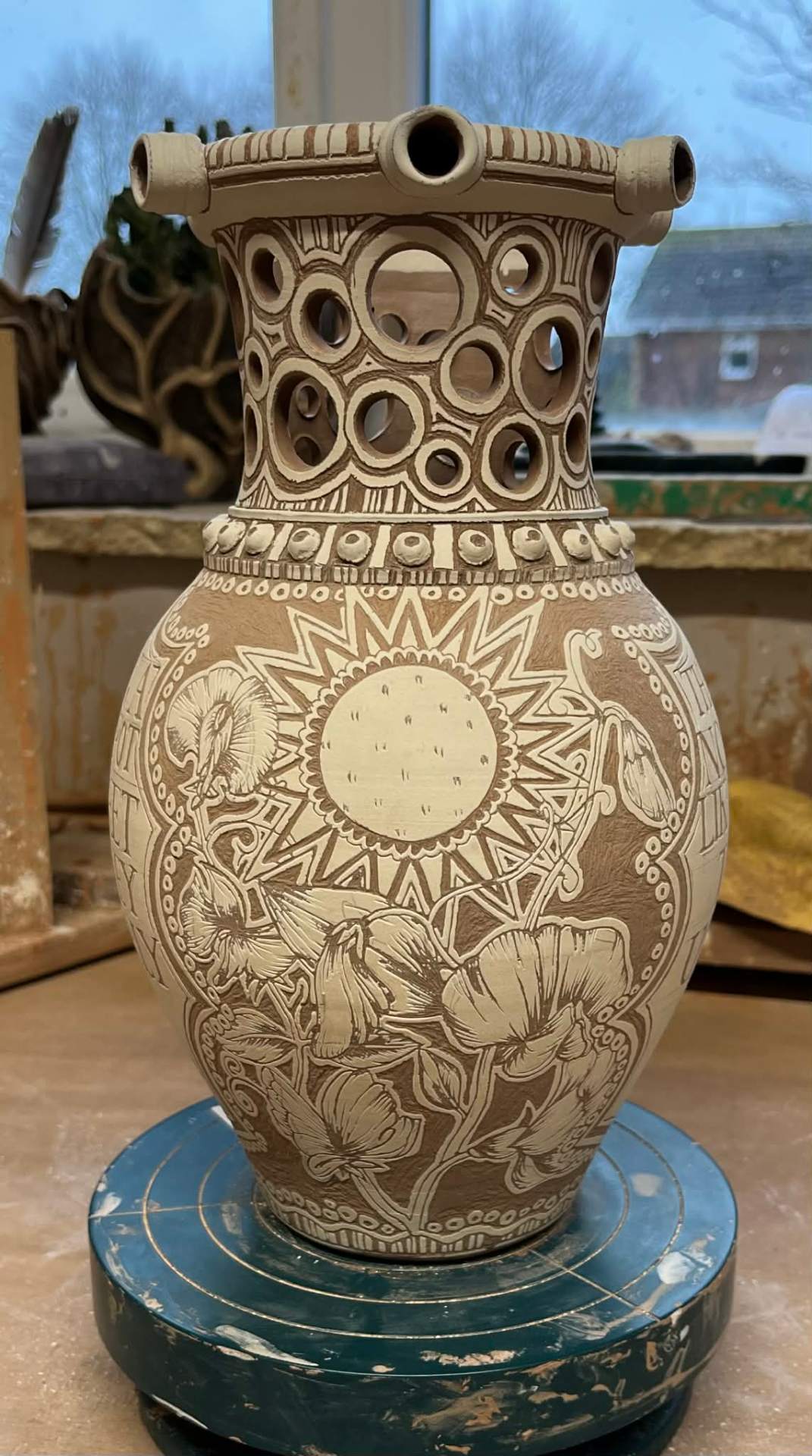
I throw on a kick wheel from a single ball of red earthenware, usually between five and nine kilos for a jug. The form is closed at the shoulder and trimmed the next day once the clay is leather-hard. The handle is pulled separately and joined while both are at the same dryness.
Stage 02
Slipping
applying the white slip layer
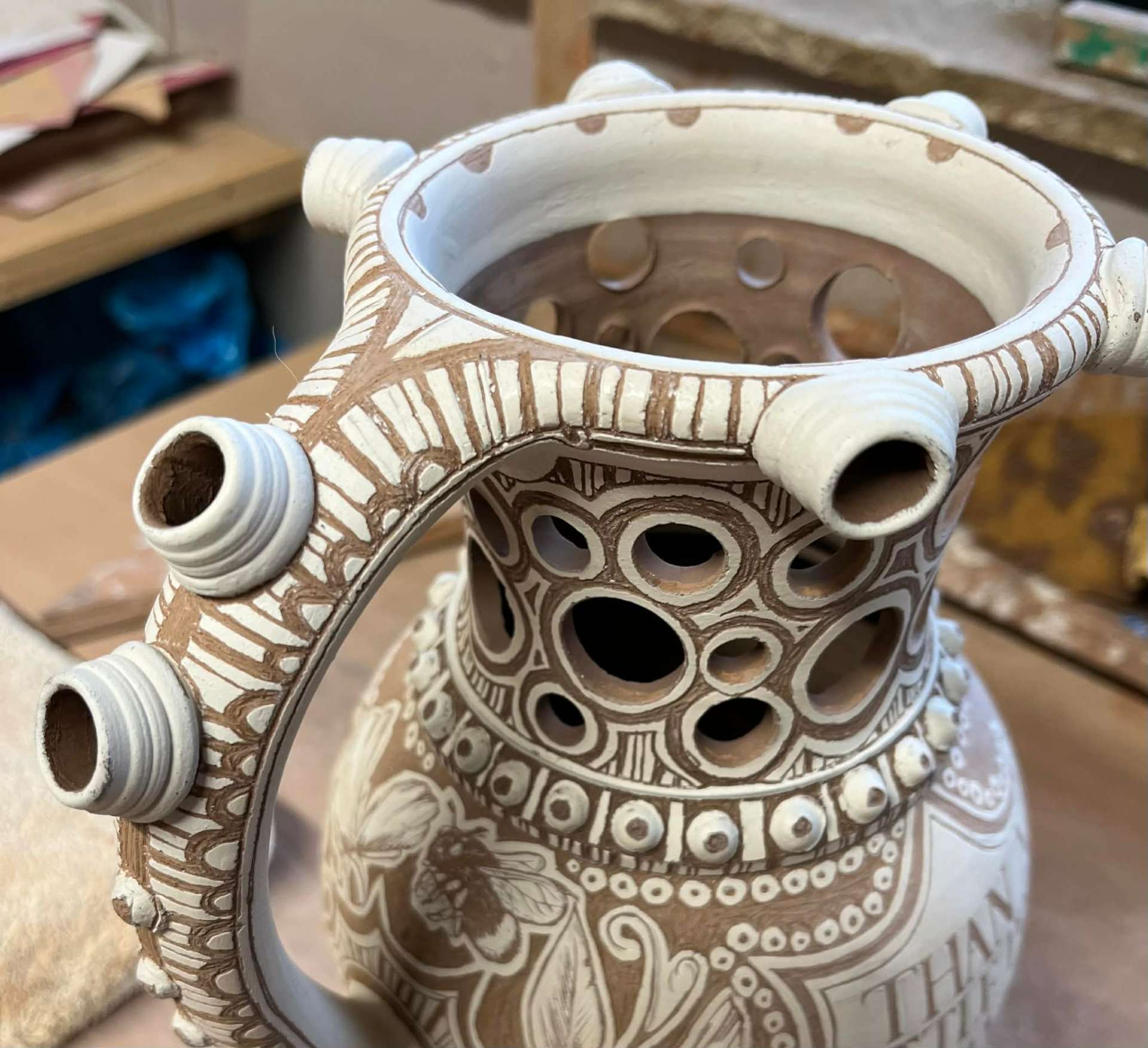
White slip — liquid clay, no different in chemistry from the body — is brushed on in two or three thin coats. It needs to dry just enough to stop being wet but not so much that it can't take a clean cut. There's a window of about half a day in which the carving has to begin.
Stage 03
Carving
sgraffito; the slow part
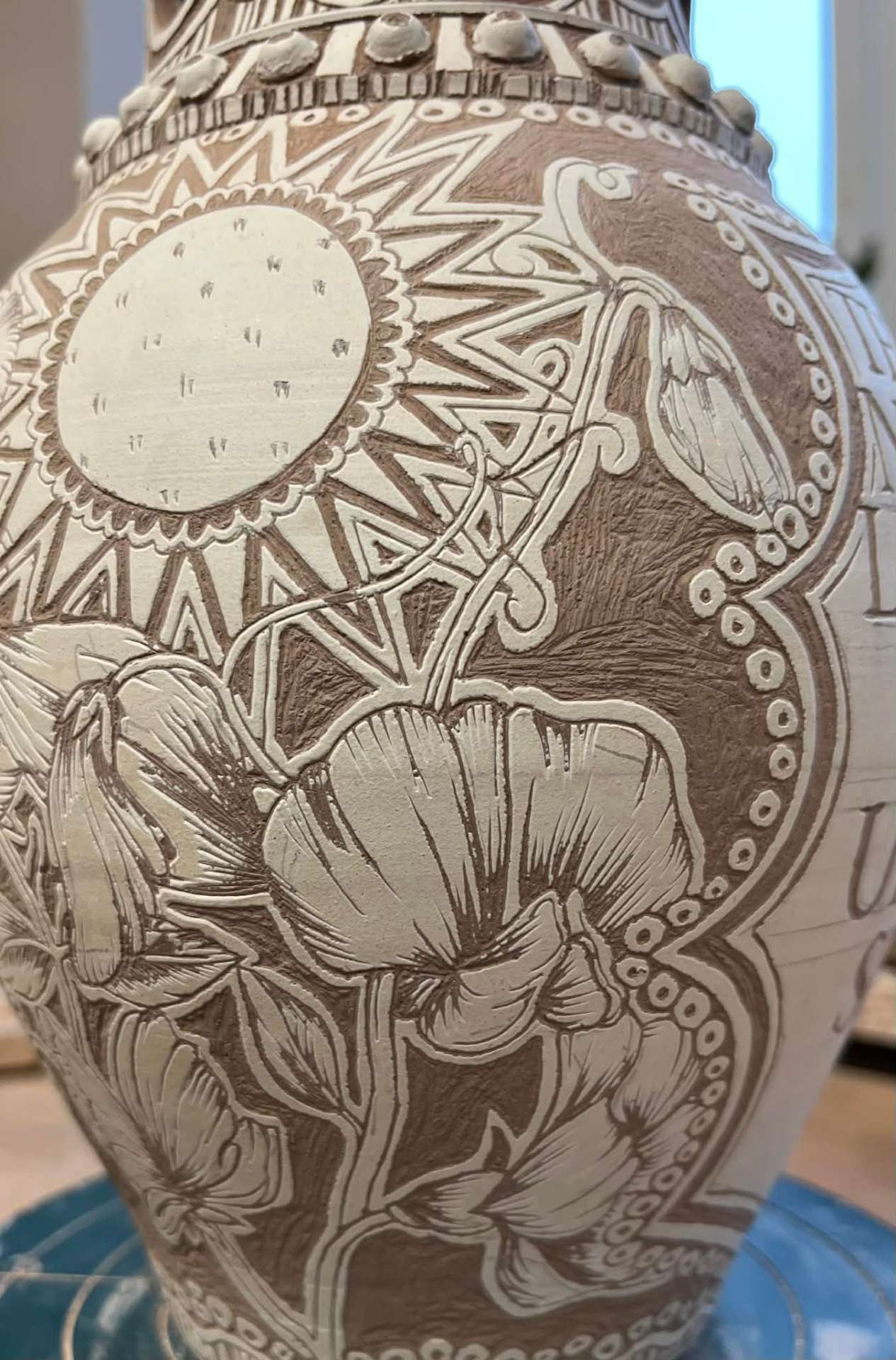
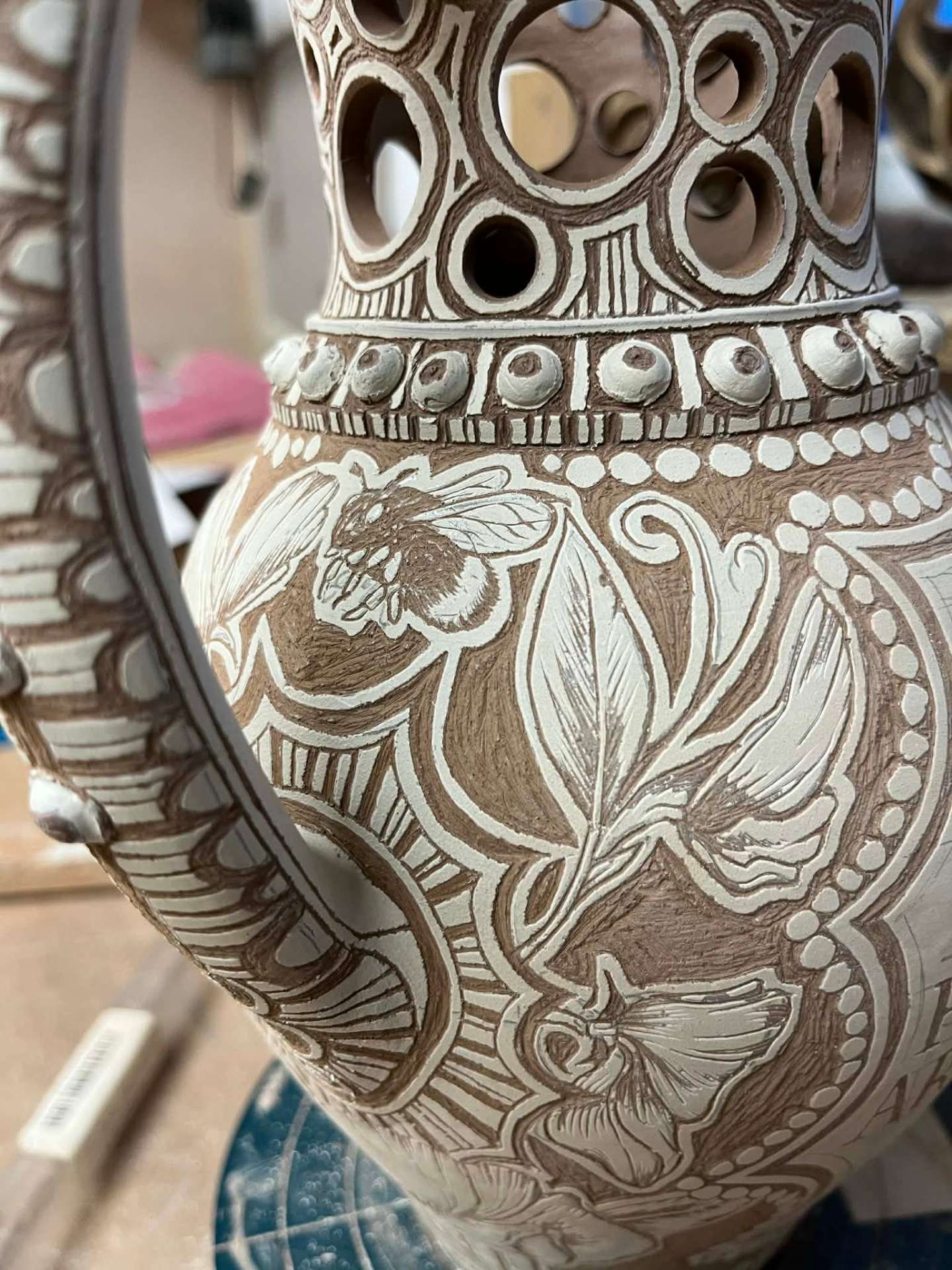
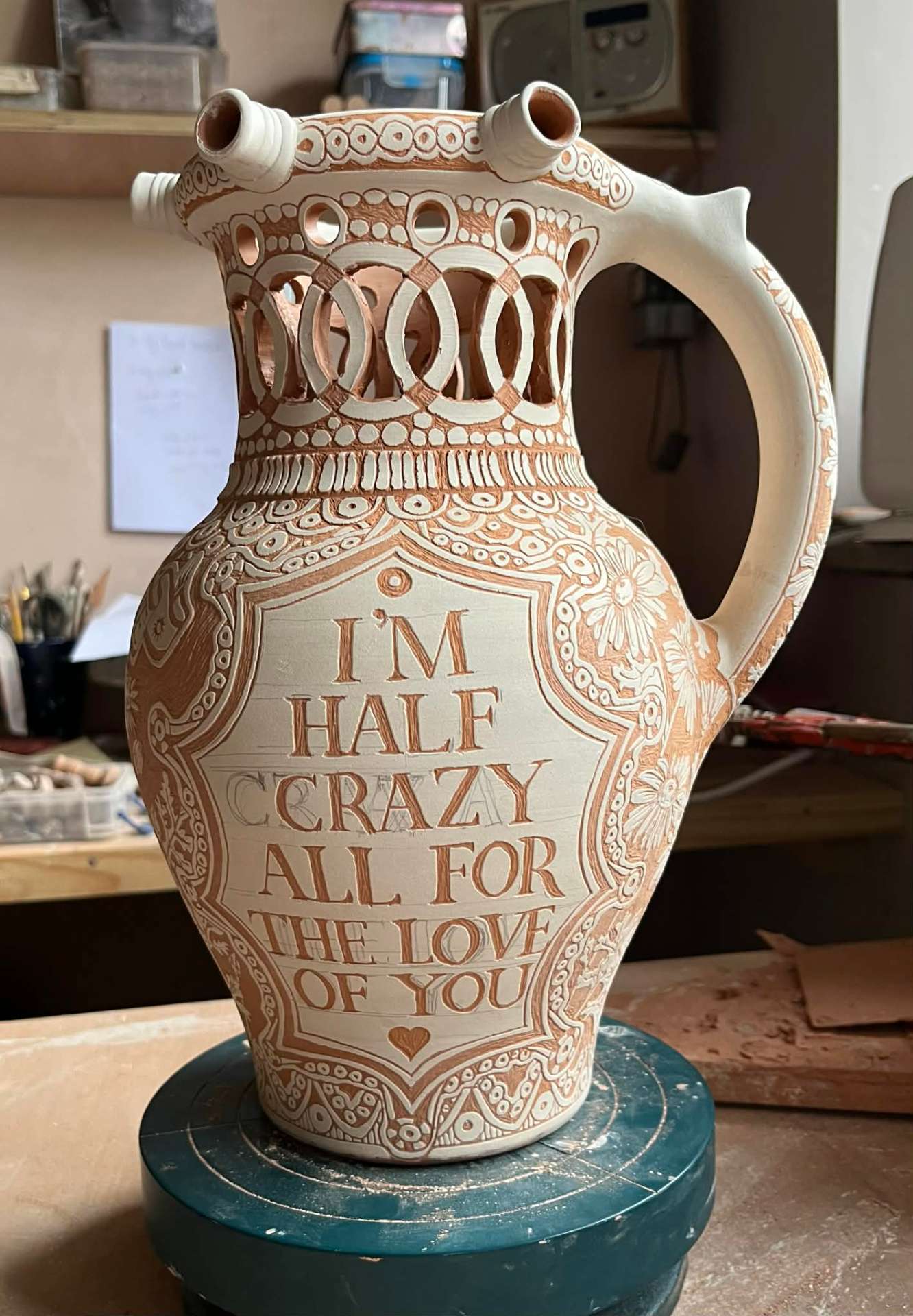
This is most of the work. I draw with a fine pin tool, scratching back through the slip to expose the red body. Letters first, then the cartouche, then the foliage. A jug takes between six and nine full days at the bench. Once a line is cut it stays cut.
Stage 04
Drying and bisque firing
the first heat
The carved piece dries slowly under newspaper for a week or more — too quick and it cracks. It then goes into the kiln for the bisque firing at around 1000°C, which leaves the body hard but still porous, ready to take whatever finish I'm using.
Stage 05
Glaze and final firing
the second heat
Most of my pieces are left unglazed externally — the contrast of red clay against white slip carries the work and a glaze tends to muddy it. I use a thin lead-free clear inside jugs that are intended to hold water. The final firing is at around 1100°C and takes a day to load and a day to fire.
Most pieces take between three and six weeks from clay to kiln.